Ouarzazate Day Trip from Marrakech
Explore the 'Hollywood of Morocco'. Discover Ait Ben Haddou, visit cinema studios, and cross the majestic High Atlas Mountains on a day excursion.
Excursion Overview
This full-day private trip takes you from Marrakech over the High Atlas to the edge of the Sahara and back, in a single long day. You cross the Tizi n’Tichka pass, explore the fortified earthen village of Ait Ben Haddou with a local guide, and visit Ouarzazate, the town that gave Morocco its reputation as a filmmakers’ paradise, before returning to Marrakech in the evening.
It’s the best way to see the landscapes of the south if you only have one day to spare. It’s also a long one: around 12 hours in total, eight of them on the road. We’re honest about that below, so you can decide whether it’s right for you.
The route at a glance
- Morning: Marrakech → Tizi n’Tichka pass (2,260 m) → Ait Ben Haddou (about 190 km)
- Afternoon: Ait Ben Haddou → Ouarzazate: the film studios and the Taourirt Kasbah (about 30 km)
- Evening: Ouarzazate → Tizi n’Tichka → Marrakech (about 200 km)
Over the High Atlas
Your driver picks you up from your riad or hotel at 7am, and within an hour Marrakech’s red plain is behind you. The N9 road climbs into the High Atlas through valleys of walnut and almond trees, past Berber villages built from the same red earth as the mountains. As the road gains height, the views widen, and there are photo stops at the best viewpoints on the way up.
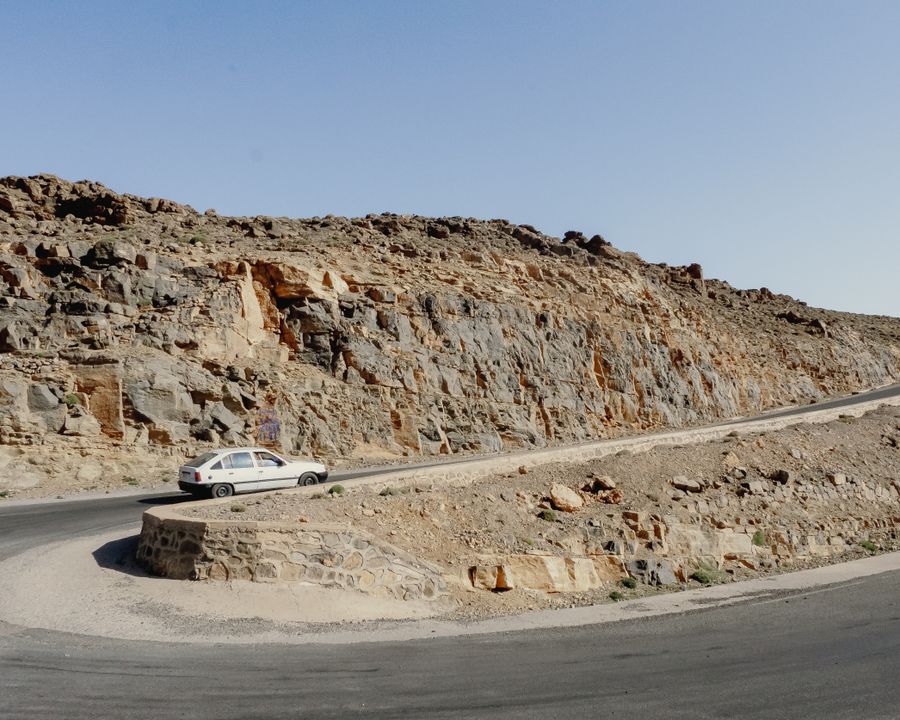
The Tizi n’Tichka pass, at 2,260 metres, is one of the highest road passes in North Africa. In winter the surrounding peaks are often white with snow; in spring the lower slopes are green. On the far side, the landscape changes quickly: the forests disappear, and the mountains turn to ochre, rust and purple as you descend towards the desert.
Ait Ben Haddou
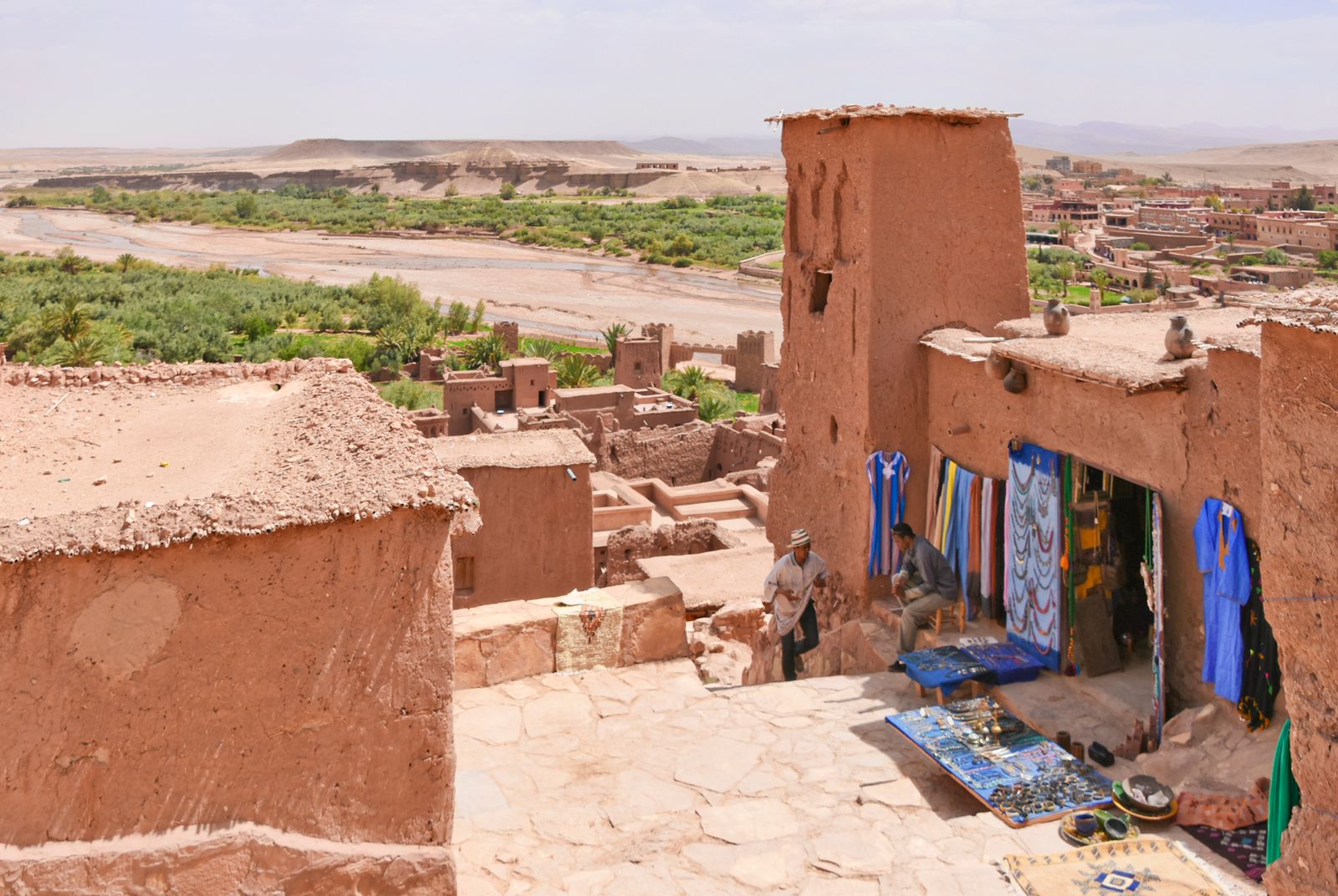
The highlight of the day is Ait Ben Haddou, a ksar of earthen houses, towers and granaries climbing a hill above the Ounila river. For centuries it was a stopping point on the caravan route between the Sahara and Marrakech, where traders rested and paid for safe passage. It has been a UNESCO World Heritage site since 1987 and is one of the best-preserved examples of earthen architecture in Morocco.
With your local guide, you cross the river, walk up through the lanes of the ksar and climb to the ruined granary at the top. From there, the view takes in the whole valley: the river, the palm groves, the new village across the water and the mountains beyond. Along the way, your guide explains how the houses are built from rammed earth and straw, how families lived here, and why most of them have moved across the river to modern homes. A handful of families still live inside the ksar, and some have opened their homes to visitors or run small craft shops.
Lunch is at a restaurant facing the ksar, or you can continue to Ouarzazate first. Lunch isn’t included, so you can choose what and where to eat.
Photographing Ait Ben Haddou
Ait Ben Haddou is one of the most photogenic places in Morocco, and a few tips help you get the best shots:
- The classic view is from the riverbank on the modern side, looking across the water to the whole ksar climbing the hill. Your guide will show you the spot before you cross.
- From the top, by the granary, you look down over the rooftops and the valley, the best angle for wide shots.
- Light: late morning is good, but the ksar glows most warmly in the late afternoon. That’s one more reason to consider an overnight stay.
- Drones: don’t bring one. Flying drones in Morocco requires official authorisation, and they’re often confiscated at customs.
Ait Ben Haddou on screen
You may feel you’ve seen Ait Ben Haddou before, and you probably have. Its walls and the surrounding desert have appeared in dozens of films and series since the 1960s, including Lawrence of Arabia, Jesus of Nazareth, The Mummy, Gladiator and Game of Thrones. Parts of the ksar have even been restored or rebuilt for filming over the years. Your guide will happily point out where famous scenes were shot.
Ouarzazate: the door of the desert
Ouarzazate, about 30 km beyond Ait Ben Haddou, is known as the “door of the desert”. It grew from a small oasis settlement into a garrison town in the 1920s, and later into the centre of Morocco’s film industry. Its wide, bright landscapes and reliable sunshine have drawn international productions for decades.
In the afternoon you can choose between two visits, or do both if time allows:
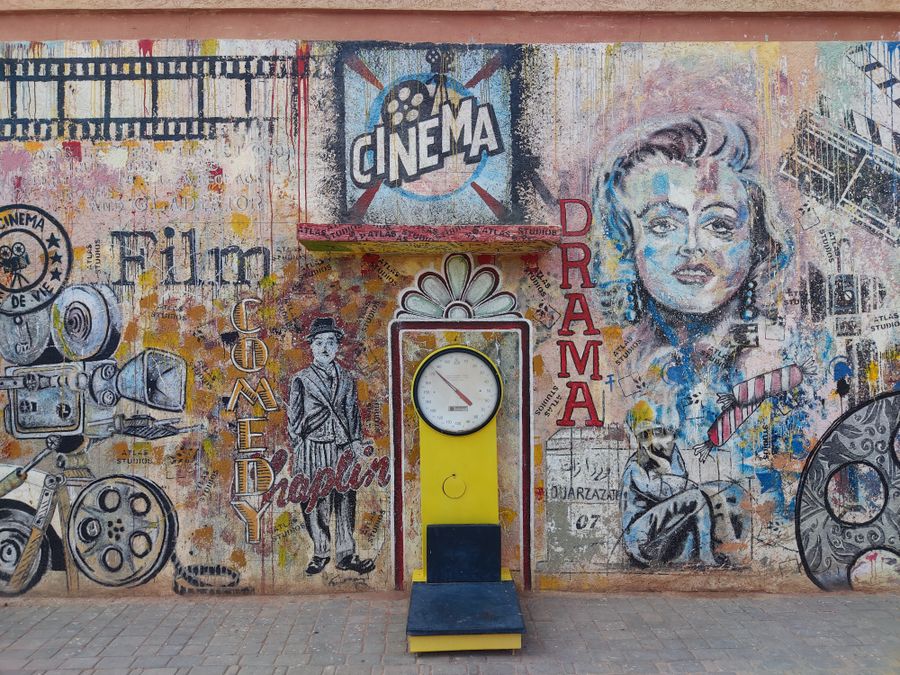
- The film studios: you can walk through sets built for well-known productions, including temples, palaces and entire streets that stand in for ancient Egypt, Tibet or Jerusalem. It’s a fun visit, especially for families and film fans.
- The Taourirt Kasbah: in the centre of town, this vast earthen kasbah was once a residence of the Glaoui family, who controlled the caravan routes of the south in the early 20th century. Part of it has been restored and is open to visitors, with painted ceilings and carved plaster in the reception rooms.
Entrance fees for both aren’t included and are paid on the spot.
The return to Marrakech
Around 4pm you set off back over the High Atlas. The mountains look completely different in the late-afternoon light, and the drive is quieter than in the morning. There’s a coffee stop on the way, and you arrive back in Marrakech around 7:30pm, when your driver drops you at your accommodation.
Is a day trip the right choice?
The honest answer: it depends on how much time you have.
- Choose the day trip if you have only one free day in Marrakech and want to see the High Atlas and Ait Ben Haddou. It’s a long day, but you’ll see a huge amount.
- Stay overnight if you’d like a gentler pace. A night in Ait Ben Haddou or Ouarzazate lets you see the ksar at sunset and sunrise, when the light is at its best and the crowds are gone. Just tell us and we’ll build it in.
- Go all the way to the desert if you have two or three days. Our 2-day Zagora desert tour and 3-day Marrakech to Merzouga tour include Ait Ben Haddou on the way to the Sahara, so you get this day and a night in the dunes.
If you’d rather spend less time in the car, the Imlil and High Atlas villages trip shows you the mountains with just over an hour’s drive each way.
Adding Telouet
For a quieter alternative to the main road, you can return (or go out) via Telouet, following the old caravan route through the Ounila Valley. The kasbah of Telouet was the mountain stronghold of the Glaoui family. It’s crumbling on the outside, but its reception rooms are covered in some of the finest decoration in southern Morocco. It adds about an hour to the day. Ask when you book.
What to wear and bring
- Layers. It can be 10–15°C cooler on the Tizi n’Tichka than in Marrakech, especially in winter and early spring.
- Comfortable shoes for the uneven paths and steps of Ait Ben Haddou.
- Sun protection: a hat, sunglasses and sunscreen. There’s little shade at the ksar.
- Cash for lunch, entrance fees and tips. There are ATMs in Ouarzazate.
- Motion sickness remedies if you need them, because the mountain road is winding.
Best time to go
The trip runs all year. Spring (March to May) and autumn (September to November) bring the most comfortable temperatures and clear views. In winter, the pass is usually open, but heavy snow can close it for a few hours. Your driver checks conditions in the morning and adjusts the plan if needed. In summer, Ouarzazate is very hot in the afternoon, so we recommend visiting Ait Ben Haddou in the morning.
Who this trip is for
This trip suits travellers staying in Marrakech who want to see the High Atlas and Morocco’s most famous kasbah in one day, and film fans curious about the studios. It’s less suited to young children or anyone who dislikes long drives. For them, a shorter mountain trip or an overnight stay is the better choice.
Good to know
- It’s a long day: about 12 hours door to door, with around 8 hours of driving.
- The ksar is free to walk through, but some houses inside charge a small fee to visit their rooftops.
- Entrance fees for the film studios and the Taourirt Kasbah aren’t included.
- Photography: ask before photographing people in the ksar, especially residents.
Excursion Highlights
- Drive through the high Tizi n'Tichka pass in the Atlas Mountains.
- Guided tour of the UNESCO World Heritage site, Ksar Ait Ben Haddou.
- Visit the Atlas Cinema Studios in Ouarzazate.
- Explore the historic Taourirt Kasbah.
Your Day, Hour by Hour
- 07:00
Early pickup in Marrakech
An early start gives you time at every stop. Head south into the High Atlas.
- 09:30
Tizi n'Tichka pass
Cross the pass at 2,260 m, one of the highest roads in North Africa, with photo stops above the Berber villages.
- 11:00
Ait Ben Haddou
Walk up through the UNESCO-listed ksar with a local guide to the old granary at the top, with its views over the Ounila valley.
- 13:00
Lunch
Lunch at a restaurant facing the ksar, or continue to Ouarzazate.
- 14:30
Ouarzazate: film studios and Taourirt Kasbah
Visit the Atlas Film Studios, where many famous films and series were shot, and the Taourirt Kasbah, once a residence of the Glaoui family.
- 16:00
Return to Marrakech
Cross the High Atlas again and arrive back in Marrakech around 19:30.
Times are approximate and adjusted to the season, traffic and your pace.
What's Included
- Hotel pickup and drop-off in Marrakech
- Private AC vehicle with driver
- Local guide in Ait Ben Haddou
- Bottled water
What's Excluded
- Lunch and drinks
- Studio entrance fees
- Tips
Optional Extras (on request)
- Stay overnight in Ouarzazate or Ait Ben Haddou and continue to the desert
- Detour to the Telouet Kasbah on the old caravan road
- Skip the film studios for more time in Ait Ben Haddou
Excursion FAQ
Inquire About This Tour
Fill out the form below and our desert experts will craft the perfect itinerary for you.
More Day Trips
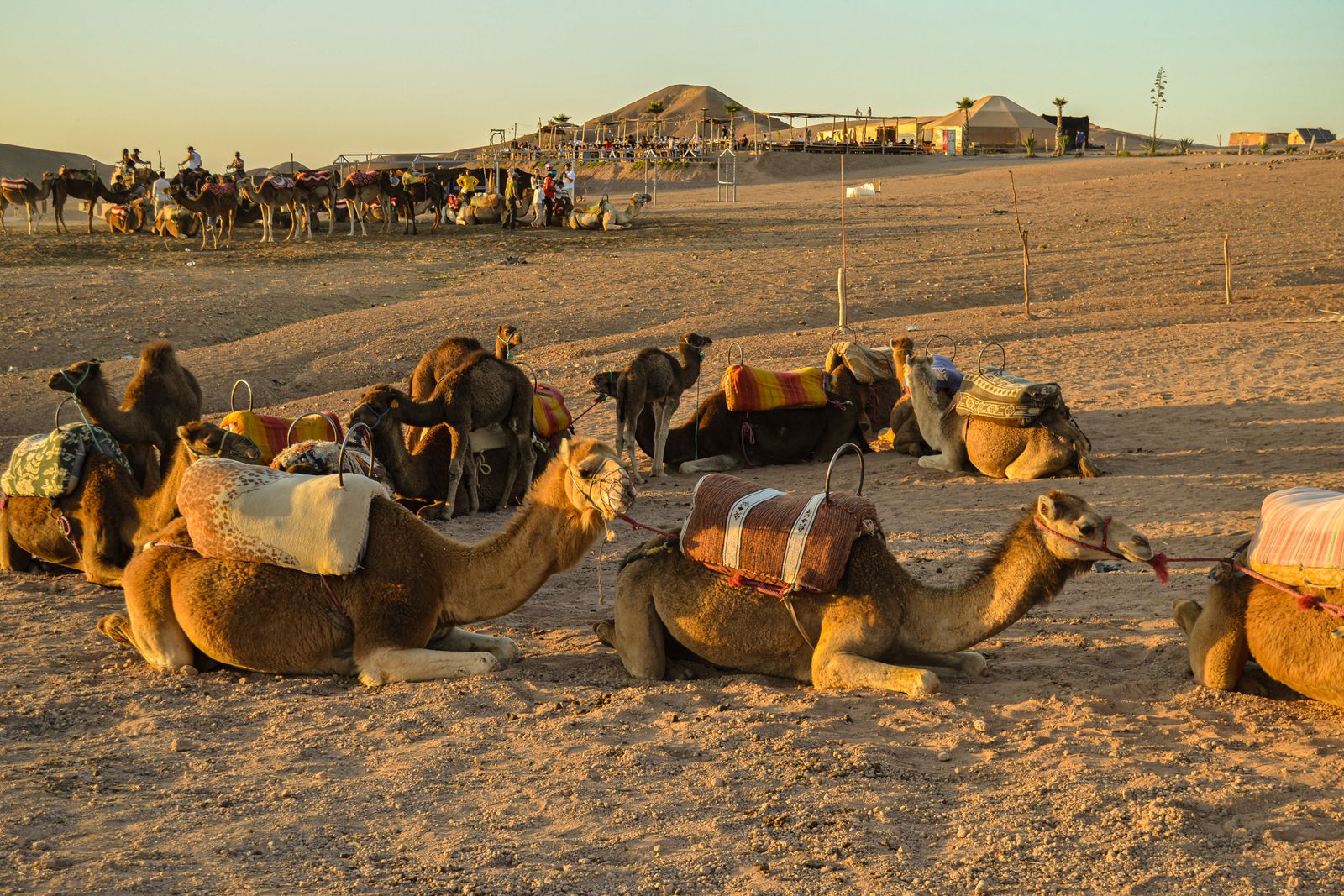
Agafay Desert Sunset Camel Ride & Dinner
Less than an hour from Marrakech, the stony Agafay Desert is the quickest way to feel the desert: a sunset camel ride with the snowy Atlas on the horizon, then dinner under the stars at a desert camp.
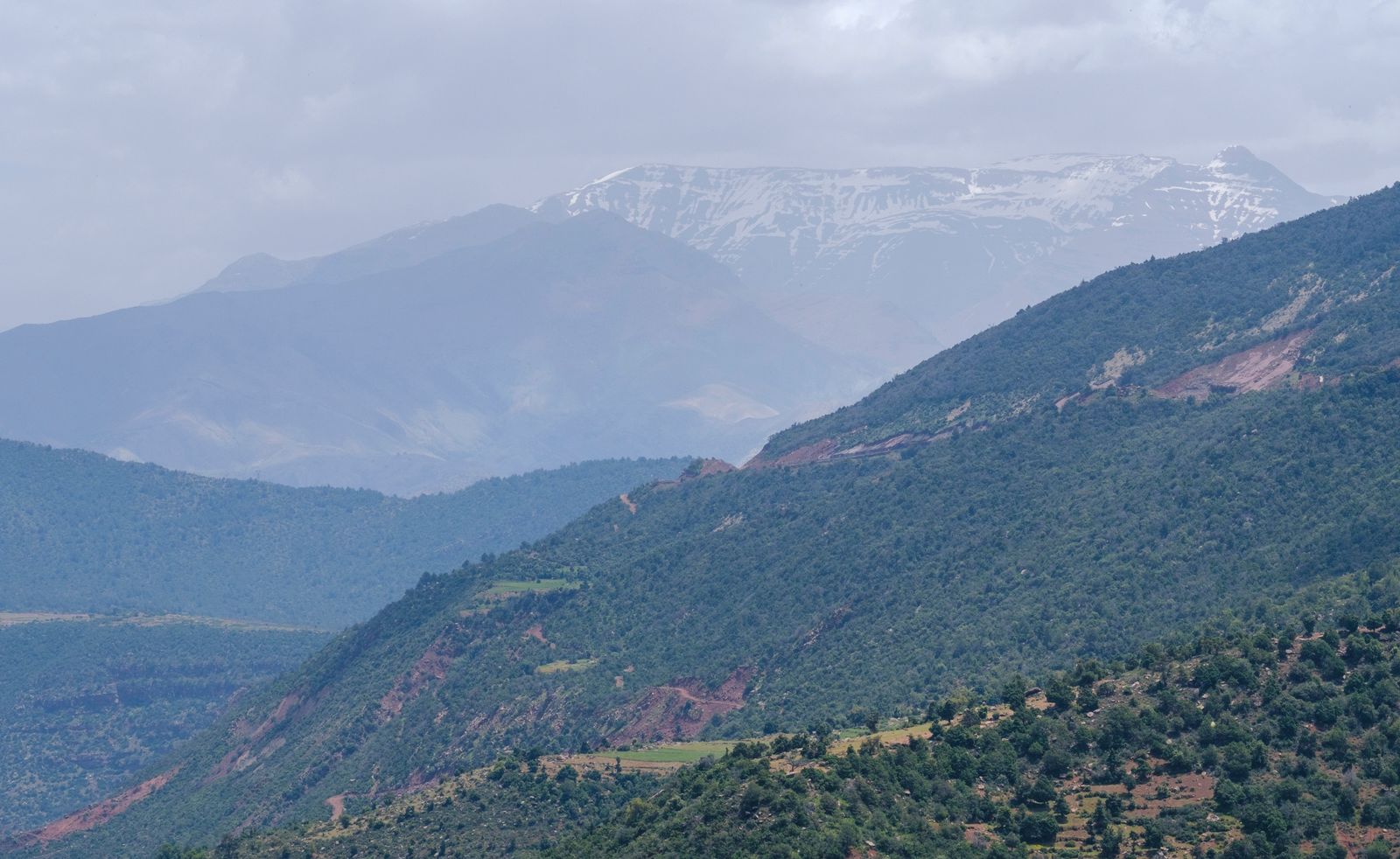
Imlil & High Atlas Villages Day Hike from Marrakech
Walk in the shadow of Toubkal, North Africa's highest peak: a guided hike from Imlil through walnut groves and terraced fields to the Berber village of Aroumd, with a home-cooked lunch in a family house.
Marrakech Full-Day Guided City Tour
See the best of the Red City in one day with a licensed guide: the Koutoubia Mosque, the Bahia Palace, the Saadian Tombs, the Ben Youssef Madrasa, the souks and the Majorelle Garden, finishing at Jemaa el-Fna as the square comes alive.